Keynote Speakers
From digital twins to Metaverse
This talk first addresses the current developments of DTs, the trends and future directions. The roles and challenges of DTs in the Metaverse environment, where humans interact with Avatars and DT facilities, is a promising and emerging evolution is presented in this talk.
Metaverse is a digital copy of the real world, and it presents an entry point for fully connected, immersive and engaging 3D experience. It is a digital space where users can enter and interact with other users virtually.
Metaverse can bring significant changes to manufacturing as it can account for how humans interact with factory equipment. Digital twins, already well established in the field, are digital replicas of systems with bi-directional communication capabilities. Humans, however, are not dynamic parts of the digital twin. On the other hand, Metaverse allows humans to interact dynamically in environments made up of digital images.
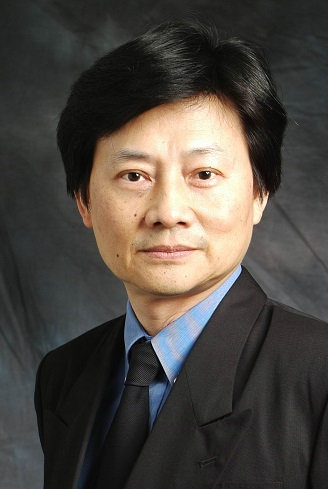 Andrew Y C Nee is currently Professor Emeritus, Department of Mechanical Engineering, National University of Singapore. He received his PhD and DEng from University of Manchester in 1973 and 2002 respectively. He is Fellow CIRP (1990), Fellow SME (1990), Fellow Academy of Engineering Singapore (2012), Fellow of Asia-Pacific Artificial Intelligence Association (AAIA) (2023). He was President of CIRP in 2012, and Gold Medal Recipient of SME in 2014. Awards include: IEEE Kayamori Award (1999), Norman A Dudley Award, International Journal of Production Research (2003), Joseph Whitworth Prize, the Institution of Mechanical Engineers (2009), Best Paper Award, Journal of Manufacturing Systems (2025). He was elected Asia’s top 100 Scientist, Asian Scientist Magazine, 2016. Received Digital Twin Outstanding Scientist Award 2024. Research interests include: Tool, die and fixture design, augmented reality applications, digital twin, remanufacturing. He has graduated 53 PhD students, published over 550 papers and 25 books, GS citation > 39,200 and H-Index 92. He is Editor-in-Chief of International Journal of Advanced Manufacturing Technology (Springer), Executive Editor-in-Chief of Advances in Manufacturing (Springer and Shanghai University), honorary professor of Beijing University of Aeronautics and Astronautics, Nanjing University of Aeronautics and Astronautics, Shanghai University, Tianjin University, Shanghai University of Science and Technology, Huazhong University of Science and Technology, Distinguish Visiting Professor of FHUST.
Advances in resilience engineering of complex systems: from 2000s to present
Today, industry 5.0 is featured by three notions, namely resilience, sustainability, and human factors and it is timely and urgent. The notion of resilience has been discussed since the early 2000, driven by the disaster management.
The speaker’s group pioneered research in the field of resilient manufacturing systems (CIRP Annals, 2011) and resilient supply chain network systems (Computers & Industrial Engineering, 2018). In this talk, the speaker will report advances in resilience engineering,
especially in the speaker’s group. The talk will cover the topics including (1) definition of the concept of resilience, (2) understanding of the relationship of resilience with sustainability and human factors,
(3) application of the resilience engineering theory for disaster management and critical infrastructure protection management, and (4) resilience in the era of the advanced AI.
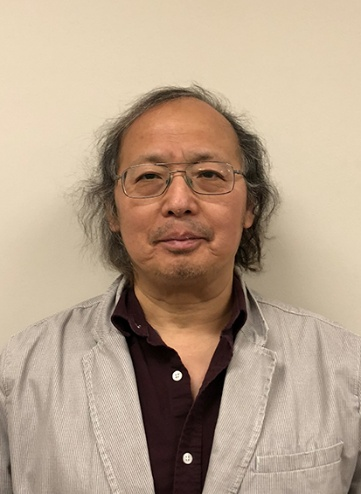 Prof. Wenjun (Chris) Zhang received a Ph.D. from the Delft University of Technology, Delft, The Netherlands, in 1994. He is currently a full professor with the Department of Mechanical Engineering and the Division of Biomedical Engineering, University of Saskatchewan, Saskatoon, SK, Canada. He has published more than 420 technical articles in peer-refereed journals or magazines and more than 230 technical articles in peer-refereed conference proceedings. He held over 20 patents, among them 3 are US patents. His H-index (Google) is 80, and his H-index (Scopus) is 65. His current research interests include resilience engineering, design & contol/management, robotics, ontology & AI. He is a Fellow of the Canadian Academy of Engineering owing to his outstanding work on resilience engineering, a Fellow of ASME owing to his outstanding work on the theory of machine and mechanism, and a Fellow of SME owing to his outstanding work on resilient manufacturing systems and eletronics packaging. He is currently a Senior Editor of the Journal of Engineering Design, Associate Editor of International Journal of System Sciences, Intelligent Manufacturing, Enterprise Systems.
Computational Psychophysiology and Mental Health
In recent years, mental health issues have become increasingly prominent all of the world.
According to the report from the World Health Organization,
approximately 970 million people suffer from mental disorders,
accounting for 13% of the global population. Currently, the diagnosis of mental illnesses primarily relies on physician interviews and Brief Psychiatric Rating Scale (BPRS), lacking objective and quantifiable diagnostic indicators.
Besides, the common treatment of mental disorders is pharmacotherapy, which is often associated with significant side effects. The rapid advancement of cutting-edge artificial intelligence and big data technologies offers new opportunities for the diagnosis and treatment of mental disorders. These technologies are shifting the approach to data driven screening and treatment, offering more precise, personalized, and effective solutions. This report will introduce the opportunities and challenges in the field of medical electronics and computational methodologies for the diagnosis and treatment of mental disorders.
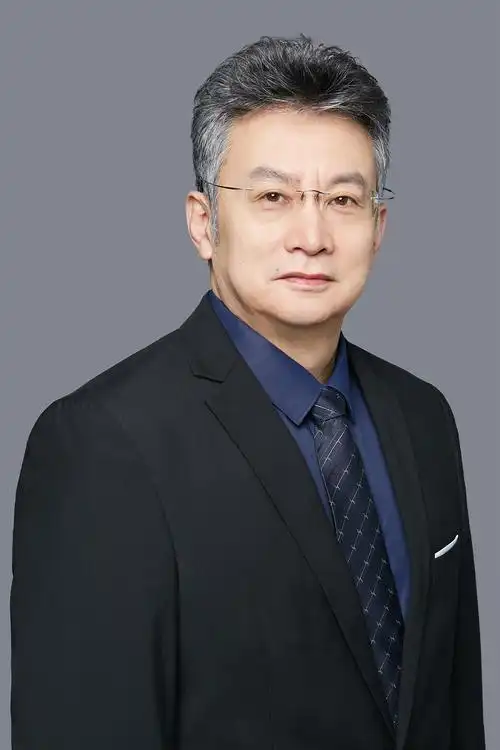 Bin Hu is a (Full) Professor in the School of Medical Technology at Beijing Institute of Technology, and adjunct Professor in Lanzhou university, China. He is a National Distinguished Expert, Chief Scientist of 973 as well as National Advanced Worker in 2020. He is a Fellow of IEEE/IET/AAIA and IET Fellow Assessor & Fellowship Advisor. He serves as the Editor-in-Chief for the IEEE Transactions on Computational Social Systems and an Associate Editor for IEEE Transactions on Affective Computing. He is one of Clarivate Highly Cited Researchers, World's Top 2% Scientists and 0.05% Highly Ranked Scholar from ScholarGPS.